
Giving focus to the Cultural, Scientific and Social Dimension of EU - CELAC relations
WP2 - Transectorial Pathways Overview
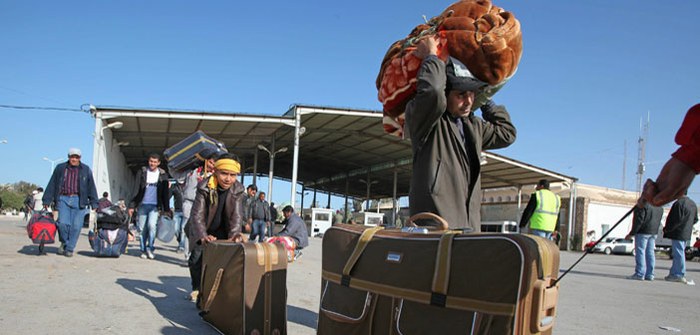 EULAC Focus intends to propose a new strategic and more focused framework for the cultural, scientific and social dimension of EU-CELAC relations. These three dimensions are intertwined by common challenges. Therefore, research into them must be cross fertilized by “Cross-cutting / trans-sectorial research pathways”. In principle, these cross-cutting issues will be classified as migration and mobility, inclusion and inequality, diversity, and sustainability (Migration and mobility are considered two different – even if unrelated - issues in accordance with the current EU approach since November 2011; see COM (2011) 743 final: The Global Approach to Migration and Mobility).
However, from a political perspective, migration, which, in fact, touches and encompasses all these issues, is gaining an ever-greater prominence, in particular from a EU perspective, in the EU–CELAC framework (EU-CELAC Structured Dialogue on Migration) as well as in general. Indeed, the European Council conclusions of June 2014 stress that migration policies need to become a stronger integral part of the Union's external and development policies through intensifying cooperation with third countries, while also calling for improving the link between the EU's external and internal policies (including research policy). Recent estimates putting at 72 million the international migrant population in Europe, and expectations that this number will increase in the future, due to economic, demographic and political factors, strengthen the importance to be given the European Council conclusions.
WP2 will facilitate and promote an interdisciplinary treatment of these trans-sectorial pathways, feeding into the analysis of the cultural, scientific and social dimensions and streamlining the work developed in the thematic pillars WP3, 4, and5 and creating a common basis for the synthesis efforts conducted in WP6. It will assure efficient knowledge exchange,close interconnections and feedback loops between the WP3, 4, and 5 in order to mutually reinforce those thematic WPs. Thus, this WP will also systematize the results obtained in the thematic WPs and guarantee their target-oriented contributions to the vision building process in WP6.
This will be accomplished by conducting the following activities:
- Refining the determination of the key cross-cutting topics, which are of high relevance for linking the cultural,scientific and social dimensions of EU-LAC relations and define the main guiding questions. This activity will take into account the evolution in 2015 (results of the 2015 EU – CELAC Summit and evolution of the general EU policy framework for External Relations (in particular referring
- Establishing a trans-sectorial board focusing on the analysis of the cross-cutting topics
- Defining and applying methodologies for trans-disciplinary exchange and synthesis, as well as producing a synthesis report as a basis for the vision building process in WP6
Final determination of cross-cutting topics interlinking the cultural, scientific and social dimensions of EULAC relations
 Key questions will be formulated on the cross-cutting issues (mobility inclusion and inequalities, diversity and sustainability) in order to guide thematic WPs 3, 4 and 5 and give input to WP6. The role and priority to be given to international migration will also be discussed and, from a qualitative perspective, an approach much more based on interaction and interculturality than on simple multiculturality will be proposed. Corresponding concepts for addressing those key questions will be defined and a common method will be developed to assure consistent input from the pillars WP3, 4, 5 and efficient feedback from WP2. A methodology for comparison will be designed in order to be able to put the outcomes of the cross-cutting analysis together. Thus, this task will provide a common basis for the vision building process in WP6 along the cross-cutting issues.
The following questions will serve as a starting point for the final definition of cross-cutting topics:
- To what extent and how does mobility have an impact on cultural, scientific, and social relations between EU and LAC?
- What are the common challenges of the EU and LAC enhancing social inclusion in their societies? What are communalities and differences in their strategies to address social inequalities? What could both regions learn from each other? What specific roles play cultural, scientific and social relations between EU and LAC for fostering social inclusion and reducing social inequalities? How is the social inclusion affected by the amenity migration as a new form of specific global population migration?
- How are diversity aspects, in particular the interculturality and multiculturality dimension, taken into account in cultural, scientific and social relations between EU and LAC? What are common grounds, what are the main differences in how diversity challenges are addressed? What could both regions learn from each other regarding how interculturality and multiculturality challenges are addressed?
- In which ways do cultural, scientific and social relations between EU and LAC consider sustainability aspects? What are examples of best practices.
- How to analyse migration as a cross-cutting issue of utmost political importance in EU – CELAC relations?
Consolidation of a trans-sectorial board & impact assessment
A trans-sectorial board (TB) will be established. It will consist of members of the EULAC-FOCUS consortiumand external experts. Two members of the TB (one from the consortium and one external expert) will be responsible for each cross-cutting issue. They will be in charge of the quality assurance of project outputs, expert advice and corresponding external networks throughout the project life cycle. The external experts will assess the consistency of the thematic priorities and methodological strategies developed in the project. The TB will also contribute to structuring the project events so as to align them with other EU-LAC events, networks and initiatives. The TB will assist in the wider validation of the research outcomes from WP3, 4, 5 through those project events.
The members of the TB will meet at the first workshop on cross-cutting issues embedded in the project kick-off meeting in order to discuss the design of the analysis as well as plan their work flow and internal communication. This workshop will also define the interlinkages between the three thematic pillars (culture, science, social), the desired impacts of WP2 and indicators for their achievement. Other meetings of the TB will be organized in
the context of workshops on cross-cutting issues in WP2-6.
Development of methodologies for trans-sectorial exchange and synthesis
 Trans-sectorial events will be the main instruments to bring all researchers of the project (and beyond) together to interact personally and have critical and multi-perspective discussions. Preferably, events will be organized back to back with big international events, preferably in the EU-CELAC context (e.g. EU-CELAC summits). The WP2 team will develop a methodological guideline for event organization which guarantees maximum interaction, diversity and impact.
The project events 2 to 4 will be dedicated to the cross-cutting issues (mobility, inclusion and inequality, diversity and sustainability), thus will be organized in the framework of this WP. Calls for conference abstracts and posters will be promoted in the scientific communities of the project partners and address senior researchers as well as young researchers. The events will be accompanied by cultural performances and side events. The ultimate objective of the project events 5-6 is to bring the vision building process of the project forward) and validate cornerstones of the vision (WP6). The events will therefore leave enough space for critical debate and make use of live voting systems.
Analysis and synthesis of cross-cutting topics
Based on the focused input of the thematic pillars WP3, 4, 5 and the joint discussions, the results of the analysis of the cross-cutting issues will be summarized. Two main objectives of the task are:
- identify through the lens of the cross-cutting issues significant similarities and differences between EU and LAC in the cultural, scientific and social dimension of their relations;
- identify where and in which sense one region could learn from the other.
This would provide an input for a better and more different understanding of EU-LAC relations (including drivers, barriers, priority axis, etc.). In addition news and/or unexpected key issues which become evident in the cross-cutting analysis of WP3, 4, 5 will be highlighted, as well as topics which are suited especially well to create bridges between the three pillars (such Associated with document Ref. Ares(2016)441420 - 27/01/2016 Page 13 of 46 as social innovation which connects social, technological and cultural issues). A matrix will visualize the chronological evolvement of priority topics in EU – LAC relations according to the analysis.
A preliminary synthesis report will be formulated, which will feed into the first project events organized in WP6. In turn, the outcomes of the first project events will complement the analytical activities of this task, leading to the formulation of the final synthesis report. The result of this task will reveal potential action fields for enhanced trans-disciplinary cooperation in the future which will feed into the vision building in WP6. Cross-cutting workshops organized as project events 2-6 are of key relevance for the analysis and the synthesis process.
News
EULAC FOCUS PROJECT - WEBINAR “Diplomacy of Innovation and Science Diplomacy: A Vision for EULAC” more
“Opportunities for Cooperation between Latin America and Europe” Info Day Report more
Science Diplomacy Workshop more
EU LAC FOCUS FIFTH HOT TOPIC WEB CONFERENCE: THE ETHICS OF ARTIFICIAL INTELLIGENCE more
Conferencia Final de EULAC-Focus more
EULAC-FOCUS Final Conference more
VINCULANDO ESTRATEGIAS DE INNOVACIÓN Y COOPERACIÓN BIREGIONAL: CUARTA CONFERENCIA WEB DEL PROYETO EULAC FOCUS SOBRE ESPECIALIZACIÓN INTELIGENTE more
Analysis of EU-CELAC Collaboration in Science, Technology and Innovation more
Mapping and Analysis of Academic Networks and Mobility Schemes between the EU and LAC more
Literature repository on EU-CELAC cultural relations more
Events
Workshop extending to viticulture the approach of the 6-8 June workshop on milk production in Manizales
Date: 09/10/2019
Joint CAMINOS/OBREAL/EULAC Mesa de discusión on synergies between EU-funded projects
Date: 10/06/2019
VINCULANDO ESTRATEGIAS DE INNOVACIÓN Y COOPERACIÓN BIREGIONAL: CUARTA CONFERENCIA WEB DEL PROYECTO EULAC FOCUS SOBRE ESPECIALIZACIÓN INTELIGENTE
Date: 05/09/2019
Presentation of EULAC Focus approach and the OBREAL/EULAC Focus initiative on Clustering
Date: 22/01/2019
Workshop on EU – LAC Higher Education relations Advancing in the EULAC Foundation’s Matrix)
Date: 27/06/2019
Synergies between research and higher education in the framework of EU-funded projects
Date: 18/07/2019
Round Table on Open Science: “Hacia una estrategia regional para el acceso a las revistas científicas”
Date: 29/08/2019
Synergies between research and higher education in the framework of EU-funded projects
Date: 07/10/2019
Reunión sobre las relaciones entre CELAC y la UE focalizando los dimensiones cultural, científica y social en la UBA el 10 de diciembre
Date: 10/12/2018
“El trato a los trabajadores migrantes: Eje transversal de las relaciones UE – CELAC”
Date: 04/12/2018
EULAC FOCUS PROJECT - WEBINAR “Diplomacy of Innovation and Science Diplomacy: A Vision for EULAC”
Date: 03/12/2019
Sessions on synergies between EU-funded projects in the framework of the CAMINO A FIESA series of events
Date: 09/09/2019
Panel: La dimensión científica de las relaciones entre Europa y América Latina: complejidades y desafíos, 25th May, Lasa Congress
Date: 25/05/2018
THE ROAD TO A COMMON LANGUAGE, EU LAC FOCUS PROJECT’S FIRST WEB CONFERENCE ON RESEARCH INFRASTRUCTURES
Date: 13/06/2017
¿Cuál es el papel de la cultura en las relaciones entre la Unión Europea, América Latina y el Caribe?
Date: 12/07/2017
Chamber of Labour Austria: „Institutional power shifts in the EU and its consequences for social policy and gender relations“
Date: 11/05/2017
"Europa – América Latina y el Caribe: ¿Asociación estratégica o distanciamiento paulatino?"
Date: 28/11/2016
¿Rebasar la brecha científica? La circulación de conocimiento como alternativa a la dependencia
Date: 20/02/2017
“HOT TOPIC” WEB CONFERENCE: TOWARDS AN OPEN SCIENCE AND OPEN ACCESS SCIENTIFIC EULAC RELATIONS 18th of April 2018- 10-12 Quito Time
Date: 18/04/2018
How to Give Focus to EU - CELAC cultural, scientific and social relations: Who, What, Where and How?
Date: 26/05/2018
WP3, Cultural Dimension Event: Buenos Aires, Argentina - Introduction of WP3 and team members Delphi analysis (Diagnosis and Strategies)
Date: 07/11/2017
CATALYST - Harmonising Actions in the Caribbean Creative Ecology - A Creative Ideas Lab
Date: 13/06/2018
Public event at C3 Institute - “Gender and Transnational Knowledge Networks: Status and Participation in the international scientific exchange”
Date: 08/11/2017
Public event at IFTH - “Diversity and Inequality: Challenges for EU-CELAC Relations”:
Date: 29/03/2017
Public event at the IAI - “Mobility and the geopolitics of knowledge: Challenges of scientific exchange between EU and CELAC”:
Date: 29/08/2016


EULAC FOCUS has received funding from the European Union's Horizon 2020 research and innovation programme under grant agreement No 693781.
Copyright © 2016-2026, All Rights Reserved. Web by Samui France - Privacy Policy