
Giving focus to the Cultural, Scientific and Social Dimension of EU - CELAC relations
News
WP2 - Cross-cutting Topics Update
In December 2016, Work Package 2 "Cross-cutting pathways", led by the Ibero-American Institute, Berlin, presented an updated version of the "Synthesis Report on Cross-cutting Topics". This version of the report analyses the four cross-cutting topics: mobility, inequality, diversity and sustainability for the scientific and social dimensions of the EU-CELAC bi-regional relations. Future versions will also take the cultural dimension into account.
Looking into cooperation programmes and activities between the EU and LAC regions within the framework of the EULAC-FOCUS project (namely: Cultural, Scientific and Social dimensions), they have often been characterized by the participation of only some countries in each region. This is the case regarding scientific mobility in which four countries in Latin America carry a very high percentage of all participation. It is also the case for a frequent exclusion of the Caribbean, or of separate negotiation processes, such as is the case in the climate programmes, EUROCLIMA Programme between EU and Latin America on the one hand, and the Global Climate Change Alliance (GCCA) programme between the EU and the Caribbean on the other.
A major institutional asymmetry in the EU-CELAC relationship is related to the fact that beyond the political dialogue, a large part of bi-regional relations is implemented through instruments to fund common programmes and activities which stem almost exclusively from the EU. There is a tendency to which funding dictates the format, the thematic priorities and outcomes.
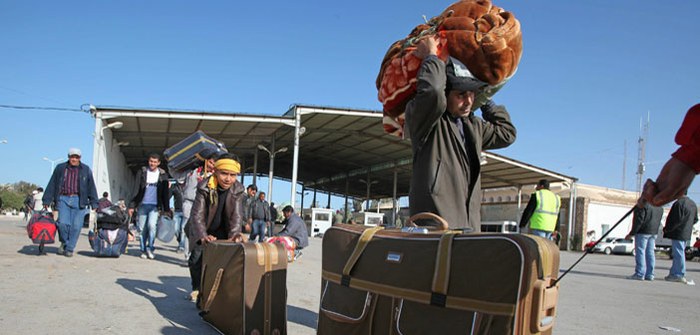 Mobility
Mobility is central to bi-regional relations between EU-CELAC in the field of science, technology and innovation.
Although specific motives and drivers for mobility are not necessarily the same on each side of the Atlantic and differ with regard to status groups, disciplines and interests, key factors for mobility include access to cutting edge science and complementary know-how, gaining entry to international technology markets, the valuation of skills, information, and insights concentrated in other countries, and access to funds from foreign institutions and foreign funding agencies.
A qualitative and strategic change in the bi-regional relationship with a significant effect on the mobility of information, knowledge and researchers is marked by the initiation of the Joint Initiative on Research and Innovation (JIRI), launched in 2010 at the Madrid Summit.
 Diversity
In the scientific dimension of bi-regional relations, diversity refers almost exclusively to biological diversity. Diversity in the sense of other types of knowledge, including traditional knowledge has been politically recognized but has not been addressed through scientific collaboration.
In the social dimension of LAC-EU bi-regional relations, diversity is defined through the lens of social cohesion and social inclusion, principally via programmes that seek the inclusion of diversity of the population considered as vulnerable — e.g., groups excluded on the basis of gender and ethnicity, or language. Diversity in the social dimension is therefore closely linked to social inequality.
News
EULAC FOCUS PROJECT - WEBINAR “Diplomacy of Innovation and Science Diplomacy: A Vision for EULAC” more
“Opportunities for Cooperation between Latin America and Europe” Info Day Report more
Science Diplomacy Workshop more
EU LAC FOCUS FIFTH HOT TOPIC WEB CONFERENCE: THE ETHICS OF ARTIFICIAL INTELLIGENCE more
Conferencia Final de EULAC-Focus more
EULAC-FOCUS Final Conference more
VINCULANDO ESTRATEGIAS DE INNOVACIÓN Y COOPERACIÓN BIREGIONAL: CUARTA CONFERENCIA WEB DEL PROYETO EULAC FOCUS SOBRE ESPECIALIZACIÓN INTELIGENTE more
Analysis of EU-CELAC Collaboration in Science, Technology and Innovation more
Mapping and Analysis of Academic Networks and Mobility Schemes between the EU and LAC more
Literature repository on EU-CELAC cultural relations more
Events
Workshop extending to viticulture the approach of the 6-8 June workshop on milk production in Manizales
Date: 09/10/2019
Joint CAMINOS/OBREAL/EULAC Mesa de discusión on synergies between EU-funded projects
Date: 10/06/2019
VINCULANDO ESTRATEGIAS DE INNOVACIÓN Y COOPERACIÓN BIREGIONAL: CUARTA CONFERENCIA WEB DEL PROYECTO EULAC FOCUS SOBRE ESPECIALIZACIÓN INTELIGENTE
Date: 05/09/2019
Presentation of EULAC Focus approach and the OBREAL/EULAC Focus initiative on Clustering
Date: 22/01/2019
Workshop on EU – LAC Higher Education relations Advancing in the EULAC Foundation’s Matrix)
Date: 27/06/2019
Synergies between research and higher education in the framework of EU-funded projects
Date: 18/07/2019
Round Table on Open Science: “Hacia una estrategia regional para el acceso a las revistas científicas”
Date: 29/08/2019
Synergies between research and higher education in the framework of EU-funded projects
Date: 07/10/2019
Reunión sobre las relaciones entre CELAC y la UE focalizando los dimensiones cultural, científica y social en la UBA el 10 de diciembre
Date: 10/12/2018
“El trato a los trabajadores migrantes: Eje transversal de las relaciones UE – CELAC”
Date: 04/12/2018
EULAC FOCUS PROJECT - WEBINAR “Diplomacy of Innovation and Science Diplomacy: A Vision for EULAC”
Date: 03/12/2019
Sessions on synergies between EU-funded projects in the framework of the CAMINO A FIESA series of events
Date: 09/09/2019
Panel: La dimensión científica de las relaciones entre Europa y América Latina: complejidades y desafíos, 25th May, Lasa Congress
Date: 25/05/2018
THE ROAD TO A COMMON LANGUAGE, EU LAC FOCUS PROJECT’S FIRST WEB CONFERENCE ON RESEARCH INFRASTRUCTURES
Date: 13/06/2017
¿Cuál es el papel de la cultura en las relaciones entre la Unión Europea, América Latina y el Caribe?
Date: 12/07/2017
Chamber of Labour Austria: „Institutional power shifts in the EU and its consequences for social policy and gender relations“
Date: 11/05/2017
"Europa – América Latina y el Caribe: ¿Asociación estratégica o distanciamiento paulatino?"
Date: 28/11/2016
¿Rebasar la brecha científica? La circulación de conocimiento como alternativa a la dependencia
Date: 20/02/2017
“HOT TOPIC” WEB CONFERENCE: TOWARDS AN OPEN SCIENCE AND OPEN ACCESS SCIENTIFIC EULAC RELATIONS 18th of April 2018- 10-12 Quito Time
Date: 18/04/2018
How to Give Focus to EU - CELAC cultural, scientific and social relations: Who, What, Where and How?
Date: 26/05/2018
WP3, Cultural Dimension Event: Buenos Aires, Argentina - Introduction of WP3 and team members Delphi analysis (Diagnosis and Strategies)
Date: 07/11/2017
CATALYST - Harmonising Actions in the Caribbean Creative Ecology - A Creative Ideas Lab
Date: 13/06/2018
Public event at C3 Institute - “Gender and Transnational Knowledge Networks: Status and Participation in the international scientific exchange”
Date: 08/11/2017
Public event at IFTH - “Diversity and Inequality: Challenges for EU-CELAC Relations”:
Date: 29/03/2017
Public event at the IAI - “Mobility and the geopolitics of knowledge: Challenges of scientific exchange between EU and CELAC”:
Date: 29/08/2016


EULAC FOCUS has received funding from the European Union's Horizon 2020 research and innovation programme under grant agreement No 693781.
Copyright © 2016-2026, All Rights Reserved. Web by Samui France - Privacy Policy